
What Smyrna Patients Should Know About Amalgam Filling Replacement
Millions of Americans still have silver fillings placed decades ago. Some are holding up fine. Others have cracked, corroded at their margins, or developed secondary decay underneath. And for many patients, the issue is not function at all, but appearance and a preference for restorations that look like natural teeth.
At Glenwood Dental Associates in Smyrna, DE, Dr. Brian Wisk evaluates aging amalgam restorations carefully and replaces them only when there is a clinical reason to do so, or when a patient has made an informed decision that replacement aligns with their goals. Patients from Dover, Clayton, and Middletown visit our Smyrna dental office to have their silver fillings assessed and, where appropriate, replaced with modern tooth-colored composite resin.
Call Glenwood Dental Associates at (302) 653-5011 to schedule your evaluation. Dr. Wisk will give you an honest, clinically grounded answer about whether your old fillings still serve you well.
Smyrna’s Choice for Conservative, Honest Restorative Care
Glenwood Dental Associates sits at 17 West Glenwood Avenue in downtown Smyrna, minutes from Duck Creek Park and the Smyrna Opera House. Dr. Brian Wisk, a Delaware native and University of Pennsylvania School of Dental Medicine graduate, has built the practice around one principle: recommend only what is clinically necessary and explain the reasoning clearly.
Patients considering amalgam replacement often arrive with conflicting information from what they have read online. Dr. Wisk addresses those conversations with patience and current evidence, and the practice’s digital X-rays and intraoral cameras mean patients can see the condition of their own restorations rather than simply taking a dentist’s word for it.
What Dental Amalgam Is and Why It Was Used
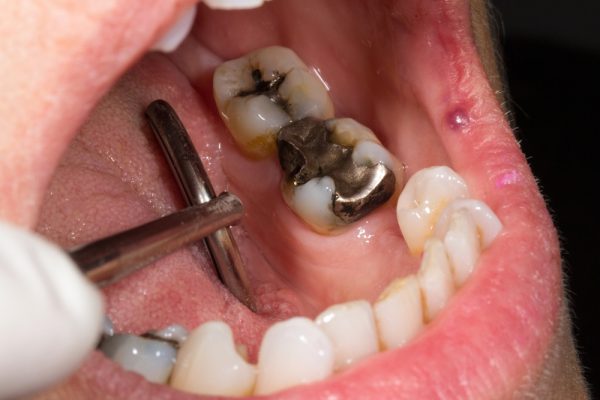 Dental amalgam is an alloy composed primarily of mercury, combined with silver, tin, and copper. It has been used in dentistry for over 150 years. Its durability, low cost, and ease of placement made it the standard choice for posterior restorations throughout most of the 20th century.
The material works through mechanical retention rather than adhesive bonding. The cavity is shaped with undercuts so the amalgam locks into place as it hardens, a reliable approach that remained dominant for decades. Well-placed amalgam fillings can last 15 to 25 years or longer, which is why so many patients still have functional silver fillings from 30 or 40 years ago.
Why Patients Consider Replacing Amalgam Fillings
The reasons patients inquire about amalgam replacement fall into three broad categories: clinical necessity, aesthetic preference, and concerns about mercury content. Understanding each one helps patients make decisions grounded in accurate information rather than anxiety or assumption.
Clinical Reasons for Replacement
Amalgam fillings do not last indefinitely. Over time, the material can crack, fracture at its margins, or develop small gaps where the filling meets the tooth. Those gaps invite bacteria and dietary acids beneath the restoration, where secondary decay can develop without obvious symptoms. Because amalgam is opaque and blocks X-ray penetration, detecting decay underneath is harder than with other materials.
Signs an amalgam filling may need replacement include visible cracking in the filling material, a tooth that has fractured or shows crazing lines radiating from the filling, persistent temperature sensitivity, a dark shadow visible through the enamel near the filling, or marginal breakdown visible on X-rays. Patients with any of these findings should not delay evaluation. Secondary decay beneath a failed amalgam can progress quickly once it penetrates the enamel layer.
Aesthetic Reasons for Replacement
 For patients with silver fillings on visible teeth, appearance is a legitimate reason to consider replacement. Modern composite resin is shade-matched to the surrounding enamel and visually indistinguishable from natural tooth structure when placed correctly. Many patients report that replacing amalgam fillings changes how they feel about smiling, particularly for upper premolars visible during normal conversation.
Aesthetic replacement is elective and not medically necessary. Dr. Wisk will always be transparent about that distinction. However, elective does not mean inappropriate, and patients who understand the process and its clinical implications can make that choice with confidence.
Concerns About Mercury
The mercury in amalgam is bound within the alloy and is not in the same form as elemental or organic mercury, which carries significant toxicity risks. Regulatory bodies, including the FDA, have historically concluded that amalgam is safe for the general population.
That said, the FDA updated its guidance in 2020, recommending that certain groups avoid amalgam where possible: pregnant women, nursing mothers, children under six, people with kidney impairment, and individuals with known sensitivity to amalgam components. Patients in these categories have reasonable grounds to discuss replacement with Dr. Wisk. For everyone else, the decision is personal, and Dr. Wisk ensures patients have accurate information before proceeding.
The Amalgam Removal Process: What Actually Happens
Amalgam removal requires more care than removing other filling materials, primarily because cutting through amalgam generates fine particles and vapor. Responsible practices use a protocol during removal that reduces patient and clinician exposure. At Glenwood Dental Associates, the removal process includes:
- Isolation of the tooth using a rubber dam, which prevents amalgam particles from being swallowed
- High-volume evacuation with a saliva ejector to remove debris and aerosol continuously during drilling
- Cutting the amalgam into large chunks and removing it in sections rather than grinding it down completely, which reduces the amount of material vaporized
- Sectioning with a high-speed handpiece using ample water coolant throughout
- Thorough rinsing of the oral cavity before the rubber dam is removed
- Preparation of the cavity for composite placement, including etching and bonding
The tooth is then restored with composite resin placed in incremental layers, each light-cured before the next is applied. Dr. Wisk checks the bite carefully after placement and makes any necessary adjustments so that the restored tooth functions correctly within the overall bite.
What Replaces Your Amalgam: Composite Resin
Composite resin bonds chemically and mechanically to tooth structure, which means less healthy tooth needs to be removed to achieve retention. Shade selection happens before any drilling begins, while the tooth is fully hydrated at its natural color.
Composite does have limitations. Under very heavy bite forces or in very large cavities, ceramic inlays or onlays may offer better long-term performance. Dr. Wisk discusses these options when the clinical situation calls for it.
Candidacy for Amalgam Replacement
 Good candidates for replacement include patients whose fillings show clinical signs of failure, patients who are pregnant or nursing and have been advised to minimize amalgam exposure, and patients with cosmetically objectionable restorations who understand the elective nature of the procedure.
Patients with very large but still clinically sound amalgam fillings may be better served by waiting. Removing a structurally intact filling carries its own risks, and if the existing restoration is very large, removal may leave insufficient tooth structure to support a direct composite. In those cases, a ceramic inlay or onlay is often the more appropriate long-term solution. Patients who grind heavily without consistent night guard use should also factor that into the conversation, as composite in high-load areas wears faster under bruxism.
Glenwood Dental Associates takes a conservative, evidence-based approach to amalgam replacement. If your silver fillings are aging and you have questions about their current condition, call us at (302) 653-5011. Dr. Wisk and our Smyrna team will give you a thorough evaluation and a clear explanation of your options.
Longevity and Maintenance After Replacement
A composite filling placed correctly in a properly prepared tooth is a durable, long-lasting restoration. Posterior composite restorations in moderate-sized cavities routinely last 10 years or more. Longevity depends significantly on the patient’s home care habits, bite forces, and compliance with routine professional maintenance.
Practices that extend the life of a composite restoration after amalgam replacement:
- Brushing twice daily with fluoride toothpaste
- Flossing daily to prevent interdental decay at filling margins
- Attending routine dental cleanings and exams at Glenwood Dental Associates so that any early marginal changes can be detected and addressed
- Wearing a custom night guard consistently if bruxism has been identified
- Avoiding habits such as biting fingernails, chewing ice, or using teeth to open packages
Composite fillings do not corrode the way amalgam can over time, and their margins remain clearly visible on digital X-rays, making long-term monitoring more straightforward. If a composite filling chips or develops wear, it can often be repaired by adding material rather than requiring complete replacement, which is a meaningful clinical advantage.
Frequently Asked Questions
For most patients, amalgam removal performed using proper protective protocols carries a low risk. The primary concern during removal is incidental exposure to amalgam particles and vapor generated during drilling, which is why techniques such as rubber dam isolation and high-volume evacuation matter.
Patients in higher-risk groups — pregnant women, nursing mothers, children under six, and those with kidney impairment — should discuss the timing and necessity of removal carefully with Dr. Wisk before proceeding. For patients not in those categories, the risk profile of a properly conducted removal is generally considered acceptable when there is a clear clinical or personal reason to proceed.
There is no clinical requirement to replace multiple fillings at the same time. Staged replacement over several appointments is often the more practical approach, both financially and in terms of recovery. It also allows Dr. Wisk to evaluate each restoration individually, since the condition of one filling tells you very little about the condition of another. Some fillings may be perfectly intact and not warrant any intervention at this time.
Coverage depends on your specific plan and the clinical justification for replacement. Most insurance plans cover composite fillings to some degree for posterior teeth, though some apply a limitation — covering only up to the cost of an amalgam filling and requiring the patient to pay the difference. If the replacement is elective rather than clinically necessary, coverage may be reduced or excluded. Our team at Glenwood Dental Associates will review your benefits before your appointment so there are no surprises.
The only reliable way to assess an existing amalgam restoration is through a clinical exam combined with current X-rays. Dr. Wisk evaluates the integrity of filling margins, looks for signs of cracking in the surrounding tooth, and reviews X-ray images for any evidence of secondary decay or marginal breakdown. Many old amalgam fillings that appear visually intact on the outside have developed issues that only become apparent on diagnostic imaging. If you have not had your existing restorations evaluated recently, scheduling an exam at our Smyrna office is the right starting point.
Schedule Your Amalgam Filling Evaluation in Smyrna
Whether your concern is clinical, cosmetic, or simply wanting to understand what is in your mouth, Dr. Brian Wisk and the team at Glenwood Dental Associates provide thorough, honest assessments and clear guidance on whether replacement makes sense for your situation.
Our dental practice in Smyrna is easily accessible to patients throughout Kent County, including those traveling from Dover, Clayton, and Middletown. Call Glenwood Dental Associates at (302) 653-5011 to schedule your evaluation and take the first step toward a confident, informed decision about your dental health.