
What Patients in Smyrna Should Know Before Their Filling Appointment
Dental fillings are one of the most common restorative procedures in dentistry, and for good reason. They stop decay from progressing, preserve the natural tooth, and restore normal function quickly. But before scheduling treatment, many patients want to know what they are actually going to pay. We work with patients from Dover, Clayton, and Middletown who want straightforward answers about what their treatment will involve financially before anything begins.
Have questions about the cost of a filling or want to confirm your coverage before your appointment? This page breaks down how dental filling costs are calculated, what insurance typically covers, and what options are available when out-of-pocket costs are a concern. Call Glenwood Dental Associates at (302) 653-5011. Our Smyrna dentist will review your insurance benefits and give you a clear estimate before any treatment begins.
Transparent Care in the Heart of Kent County
Glenwood Dental Associates sits at 17 West Glenwood Avenue in downtown Smyrna, close to Citizens Bank and the Smyrna Opera House, with easy access from Dover, Clayton, and Middletown via Route 13. Dr. Brian Wisk, a Delaware native and University of Pennsylvania School of Dental Medicine graduate, built this practice on the belief that patients deserve honest financial information before committing to any treatment.
Before any procedure begins, our team reviews your insurance benefits and walks through your out-of-pocket estimate. There are no surprises at checkout and no pressure to pursue treatment you are not ready for.
How Much Do Dental Fillings Cost?
 There is no single price for a dental filling because the cost varies based on the specific tooth, the material used, the size of the cavity, and whether any additional treatment is required. That said, general ranges can help patients set reasonable expectations.
For a straightforward composite resin (tooth-colored) filling on a single surface, costs at most general dental practices typically fall between $150 and $300 per tooth. Larger fillings covering two or three tooth surfaces may range from $200 to $400 or more. Amalgam fillings, which are still placed, tend to cost somewhat less. Very large restorations or those requiring ceramic inlays placed by a dental laboratory can range from $500 to over $1,000 per tooth.
It is worth noting that waiting to treat a cavity almost always increases total cost. A small filling placed early is consistently less expensive than the dental crown, root canal, or tooth extraction that can become necessary when decay is left to advance.
Factors That Influence the Cost of Your Filling
Several clinical and logistical variables determine what a patient will pay for a dental filling. Understanding these factors helps explain why two patients with cavities can have very different bills.
Filling Material/Technique
The material used to restore the tooth has the largest influence on cost. The most common options are:
 Composite resin: Tooth-colored, bonds adhesively to the tooth, and is the standard material used at Glenwood Dental Associates for most restorations.
 - Dental amalgam: A silver-colored alloy that has been used for over a century. Durable under heavy load and typically less expensive than composite.
- Ceramic inlays and onlays: Laboratory-fabricated restorations made of porcelain or composite ceramic. Used for very large cavities where a direct filling would not provide sufficient strength.
- Gold restorations: Rare today but occasionally used for large posterior restorations where extreme durability is the priority. Among the most expensive options.
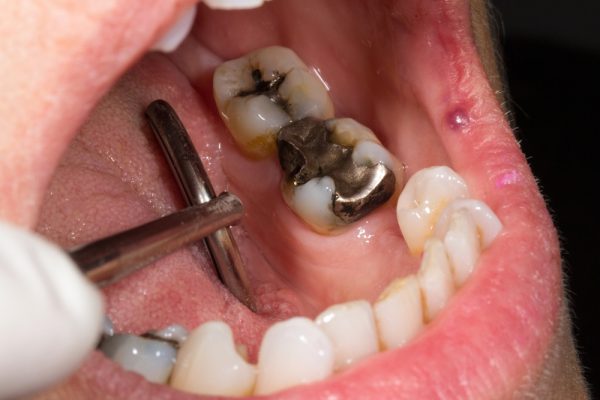 Composite resin
Cavity Size and Number of Surfaces
Dental billing uses a surface system to describe the extent of a filling. A simple cavity on one surface of a tooth costs less than a compound or complex filling that covers two or three surfaces. This reflects the additional clinical time and material required. Most routine fillings involve one or two surfaces.
Location of the Tooth
Posterior teeth, particularly molars, are more time-consuming to restore than anterior teeth. The anatomy is more complex, isolation is more difficult, and the restorations must withstand greater bite forces. Anterior fillings are generally completed more quickly and at a lower cost.
Secondary Decay or Additional Treatment
If decay beneath an old filling is discovered during removal, or if a cavity has progressed closer to the dental pulp than initially apparent, additional clinical steps may be required. In some cases, a medicated liner is placed before the final restoration. In more advanced situations, root canal therapy may be necessary before a filling or crown can be placed.
Geographic Location
Dental fees vary across regions. Practices in higher cost-of-living areas generally charge more than those in smaller communities. Smyrna and the surrounding Kent County area fall within a mid-range pricing environment compared to larger metropolitan markets.
What Dental Insurance Typically Covers
Most dental insurance plans classify fillings as a basic restorative procedure. Under standard plan structures, basic procedures are covered at 50% to 80% of the allowed fee after the annual deductible has been met. The remaining percentage is the patient’s responsibility.
A few nuances are worth understanding:
- Frequency limitations. Most plans will not cover a replacement filling on the same tooth within a set period, typically five years, unless clinical necessity can be documented.
- Material limitations. Some insurance plans cover composite resin fillings at the same rate as amalgam for posterior teeth, and pay only up to the amalgam allowance. This means a patient choosing composite on a back molar may pay the cost difference out of pocket even with insurance.
- Annual maximums. Most dental insurance plans cap annual benefits at $1,000 to $2,000. Patients with multiple fillings needed in the same year may reach that maximum, leaving the remaining treatment as an out-of-pocket cost.
- Waiting periods. Some plans require a waiting period before basic restorative services are covered, particularly for newly enrolled members.
 Frequency limitations.
The team at Glenwood Dental Associates will verify your specific benefits before your appointment and provide a clear breakdown of estimated costs so there are no surprises.
Paying for Fillings Without Insurance
Patients without dental insurance have several options for managing the cost of treatment.
Pay-in-Full at Time of Service
For patients who prefer simplicity, paying at the time of service is always an option. Our Smyrna office accepts major credit cards, checks, and cash.
CareCredit Financing
Glenwood Dental Associates partners with CareCredit, a healthcare financing service that allows patients to pay for treatment over time rather than in a single upfront payment. CareCredit offers promotional periods with low or no interest for qualified applicants. Applications can be completed quickly, and approval is often immediate. This option is particularly useful for patients who need multiple fillings or who are combining restorative care with other dental work.
Flexible Spending Accounts and Health Savings Accounts
If you have an FSA or HSA through your employer, dental fillings are an eligible expense. These accounts allow you to pay for qualifying healthcare costs with pre-tax dollars, which effectively reduces the real cost of treatment. Patients with funds available in these accounts are encouraged to use them before their plan year ends.
Community and Reduced-Cost Options
Patients experiencing financial hardship may also want to explore dental school clinics, which provide care at significantly reduced rates under the supervision of licensed faculty. Community health centers in Delaware sometimes offer sliding-scale dental services as well. Our team can point you toward available resources in the Smyrna area if needed.
Glenwood Dental Associates serves patients from Smyrna and the surrounding communities, including Dover, Clayton, and Middletown. If cost has been the reason you have been putting off a filling, call us at (302) 653-5011. We will review your options before your appointment so you can make a decision that works for your budget.
Is It Worth Treating a Small Cavity Now?
 This is a question patients often ask, and the answer is almost always yes. Small cavities are inexpensive to treat. The procedure is brief, the recovery is minimal, and the restoration can last a decade or more with proper care.
When decay is left untreated, the cavity grows. Enamel, once lost to decay, does not regenerate. As the decay deepens into dentin and eventually approaches the dental pulp, treatment options become more complex and more expensive. A root canal and crown can cost many times more than the filling that would have been sufficient at an earlier stage. Extraction followed by implant placement to preserve the bite is even more so.
The financial argument for early treatment is straightforward: the longer a cavity goes unaddressed, the more it will cost to fix.
Frequently Asked Questions
Composite resin fillings are generally priced higher than amalgam fillings, typically by $30 to $100 per surface, depending on the practice and the complexity of the restoration. The additional cost reflects the more technique-sensitive placement process and the material itself. For most patients, the aesthetic benefit of a tooth-colored restoration makes the difference worthwhile, particularly for visible teeth. At Glenwood Dental Associates, Dr. Wisk discusses material options with every patient so the choice is based on both clinical appropriateness and personal preference.
Many insurance plans do cover composite resin fillings on posterior teeth, but some pay only up to the cost of an amalgam filling for back teeth and require the patient to cover the difference. The exact coverage depends on your specific plan. Our team will verify your benefits before your appointment and let you know exactly what your out-of-pocket responsibility will be, so you are not surprised by the bill.
If cost is a barrier, the most important thing is to communicate that with our team rather than avoid treatment altogether. We can discuss CareCredit financing, which allows you to break the cost into manageable monthly payments. We can also help stage treatment across multiple appointments if you need multiple fillings, spreading costs over time. In some cases, we may be able to identify community resources or reduced-cost options that fit your situation.
In most cases, yes. A cavity that is treated while it is small and confined to the enamel or superficial dentin requires only a direct filling. If that same cavity is left untreated and decay reaches the pulp, root canal therapy becomes necessary before any permanent restoration can be placed, and a crown is typically required afterward. The combined cost of those procedures is substantially higher than a filling placed at the right time.
The filling fee covers the clinical procedure, but some appointments also involve diagnostic costs such as X-rays, particularly if you are a new patient or if current images are needed to assess the extent of decay. If secondary decay is found during the procedure or if a protective liner is needed near the pulp, those steps may add to the total. Our team will always discuss any additional clinical needs before proceeding, so you have the opportunity to ask questions and understand the full scope of treatment.
Schedule Your Appointment at Glenwood Dental Associates
Knowing what a dental filling will cost before you sit in the chair makes the experience less stressful. At Glenwood Dental Associates in Smyrna, DE, we provide clear cost estimates, verify insurance before your appointment, and offer financing options for patients who need them.
Dr. Brian Wisk and our team welcome patients from throughout the area, including Dover, Clayton, and Middletown. These communities are not separate office locations, but patients from those areas regularly visit our Smyrna dental office and receive the same level of care. If you have a cavity that needs attention or simply want to know where you stand with your dental health, we are ready to help.
Call us at (302) 653-5011 to schedule your appointment or to ask any questions about cost, coverage, or payment options before your visit.