
Don’t Let Cavities Disrupt Your Daily Life
When tooth decay goes untreated, the consequences extend well beyond a single cavity. At Glenwood Dental Associates in Smyrna, DE, dental fillings represent one of the most impactful restorative treatments we provide. Dental fillings not only address decay, but they halt a chain of events that can lead to far more complex problems down the line. Patients from Dover, Clayton, and Middletown regularly visit our Smyrna dental office to take advantage of this simple, highly effective treatment.
Ready to restore your smile? Glenwood Dental Associates serves patients throughout Smyrna, Dover, Clayton, and Middletown. Call us today at (302) 653-5011 to schedule your appointment with Dr. Brian Wisk.
About Glenwood Dental Associates — Your Smyrna Dental Home
Glenwood Dental Associates, located at 17 West Glenwood Avenue in Smyrna, DE, delivers clinically precise, genuinely personal dental care. Dr. Brian Wisk earned his Doctor of Dental Medicine from the University of Pennsylvania School of Dental Medicine and practices conservative dentistry, restoring only what is clinically necessary while preserving as much natural tooth structure as possible. The practice uses digital X-ray technology that reduces radiation exposure while producing high-resolution diagnostic images, allowing Dr. Wisk to detect early decay before it becomes a larger problem.
What a Dental Filling Actually Does — and Why It Matters
A filling does more than plug a hole. When decay is removed, what remains is a void in the enamel and often the dentin beneath it. Left open, that space collects bacteria, debris, and moisture, inviting continued deterioration and eventual structural failure. The filling material occupies that space, seals the surface, and restores the tooth so it can function normally under biting and chewing forces.
Modern composite resin bonds chemically and mechanically to tooth structure, stabilizing remaining tooth walls and reducing micro-fractures that occur when unsupported enamel flexes under pressure. Sealing the cavity also cuts off the nutrient supply to residual bacteria, stopping further decay at that site.
Untreated cavities expand, and the rate accelerates as decay reaches softer, less mineralized layers. A filling placed early preserves far more tooth structure than one placed after decay has penetrated into dentin or approached the pulp. This is why routine dental exams are not just recommended; they are clinically significant.
Ten Clinical Benefits of Dental Fillings
The advantages of dental fillings span functional, structural, aesthetic, and preventive categories. Below is a breakdown of what a properly placed filling delivers:
 1. Decay Elimination and Bacterial Containment
 1. Decay Elimination and Bacterial Containment
Removing decayed tooth structure eliminates the infected material and the environment that bacteria depend on. The filling then seals the prepared cavity, preventing recontamination from saliva and dietary acids. Without this containment, bacterial acids continue dissolving the mineral matrix of the tooth.
2. Preservation of Natural Tooth Structure
Every millimeter of natural enamel and dentin preserved has value. Teeth treated early with fillings retain significantly more of their original structure than teeth that require crowns, root canals, or extraction due to advanced decay. Natural tooth structure is mechanically superior to any restorative material as it is living tissue that integrates with the jaw and responds dynamically to biting forces.
3. Restored Chewing Function
Cavities alter the surface geometry of a tooth, disrupting the way the upper and lower teeth meet. This changes how forces are distributed across the bite, often causing compensatory chewing habits that stress other teeth. A filling restores the proper contour, reestablishing balanced occlusal function and reducing wear on adjacent and opposing teeth.
4. Pain and Sensitivity Relief
 4. Pain and Sensitivity Relief
Dentin contains microscopic tubules that connect to the nerve of the tooth. When decay breaches the enamel and enters dentin, those tubules become exposed to thermal and chemical stimuli, producing the sharp sensitivity many patients describe with sweets, cold drinks, or cold air. Removing the decay and sealing the dentin with a filling eliminates this pathway, typically providing prompt relief from sensitivity.
5. Improved Aesthetics with Tooth-Colored Materials
Composite resin fillings are shade-matched to the surrounding enamel, making them visually indistinguishable from natural tooth structure in most cases. This matters particularly for visible front teeth, but increasingly, patients request composite for posterior teeth as well. At Glenwood Dental Associates, Dr. Wisk selects the appropriate material based on both the clinical requirements of the site and the patient’s aesthetic preferences.
6. Long-Term Durability
Modern composite resins are engineered to withstand the repetitive mechanical loads of chewing. Posterior composite fillings placed by experienced clinicians using proper bonding techniques routinely last ten years or more. Longevity is influenced by the size and location of the filling, the patient’s bite forces, and home care habits.
7. Fracture Risk Reduction
A weakened tooth (one with an open cavity, undermined cusps, or unsupported enamel) is significantly more vulnerable to fracture. Biting down on something firm can crack an already compromised tooth catastrophically, turning a straightforward filling case into a crown or extraction situation. A well-placed filling reinforces the remaining structure and redistributes occlusal stress more evenly across the tooth.
8. Efficient, Minimally Invasive Procedure
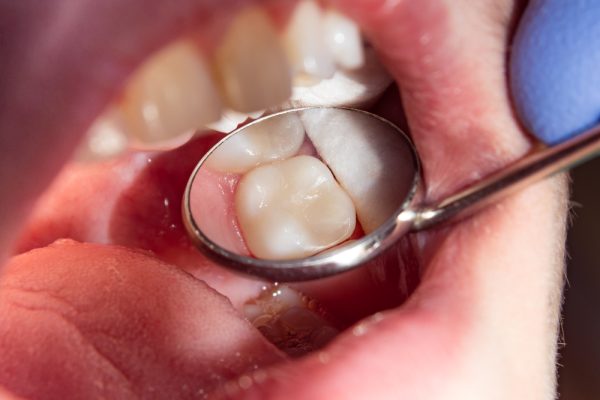 8. Efficient, Minimally Invasive Procedure
Compared to the alternative restorative options that become necessary when decay is allowed to progress — dental crowns, root canals, dental implants — a filling is brief, conservative, and accomplished in a single appointment. Most fillings at our Smyrna office are completed within 45 to 60 minutes, with no post-procedure downtime required.
9. Minimal Post-Procedure Sensitivity
Some patients experience mild temperature sensitivity in the days following a filling as the tooth adjusts. This is a normal physiological response and resolves within one to two weeks in the vast majority of cases. It is not indicative of a problem with the filling. Patients who experience sensitivity beyond that window are encouraged to contact our office at (302) 653-5011 so we can evaluate the bite adjustment and confirm the restoration is seated correctly.
10. Cost-Effectiveness Compared to Delayed Treatment
The financial case for treating cavities early is straightforward. A small composite filling is a fraction of the cost of the treatments that become necessary if decay is left to advance. Proactive treatment is not only better for the tooth; it is consistently better for the patient’s budget over time.
Frequently Asked Questions
Early treatment removes decay before it reaches dentin or the pulp, preserving more natural tooth structure and avoiding the root canals, crowns, or extractions that become necessary as decay advances. A small filling placed today prevents a much larger, costlier procedure later.
Composite resin fillings typically last 7 to 12 years, often longer in lower-stress areas. Longevity depends on the filling’s size and location, the strength of your bite, and your home care habits. Dr. Wisk evaluates existing restorations at every routine exam, so any early breakdown can be addressed before it compounds.
In most cases, yes. If you had sensitivity from decay-exposed dentin, sealing the tooth typically resolves it. Some patients experience mild post-procedure temperature sensitivity as the tooth adjusts, which resolves within one to two weeks. If sensitivity persists beyond that, contact our office at (302) 653-5011.
Decay produces no symptoms in its early stages. By the time a tooth hurts consistently, decay has usually reached the pulp, requiring a root canal rather than a simple filling. Composite fillings placed early are conservative, tooth-colored, and completed in a single appointment, and they prevent the pain and cost of advanced treatment.
Decay expands through enamel into dentin and eventually reaches the pulp, the inner tissue containing the nerve and blood supply. At that point, a root canal is required before any permanent restoration can be placed. Severe structural compromise may leave extraction as the only option, requiring an implant or bridge to replace the tooth. A filling avoids all of these outcomes and is always the least invasive option available at the time of diagnosis.
Schedule Your Appointment at Glenwood Dental Associates Today
Treating decay early preserves tooth structure, prevents pain, and avoids the cascading costs of advanced restorative care. At Glenwood Dental Associates, Dr. Brian Wisk approaches every filling with clinical precision and a commitment to your comfort, using tooth-colored composite resin, digital diagnostics, and conservative care that treats only what is necessary.
Our Smyrna dental clinic is convenient for patients from Dover, Clayton, Middletown, and surrounding communities. Call us at (302) 653-5011 to schedule your consultation.