
Emergency Dental Care Near You at Glenwood Dental Associates
A cracked or broken tooth can stop your day cold. One wrong bite on something hard, one moment of unexpected impact, and suddenly you’re dealing with sharp pain, jagged edges, and a whole lot of uncertainty about what comes next. The good news is that prompt professional care makes a significant difference in the outcome. At Glenwood Dental Associates in Smyrna, DE, Dr. Brian Wisk is here to provide it. We treat broken and cracked tooth emergencies for patients throughout Smyrna and the surrounding communities of Dover, Clayton, and Kenton.
Call (302) 653-5011 right away if you’ve cracked or broken a tooth. The sooner we see you, the more options we have.
Why Smyrna Patients Trust Dr. Wisk for Dental Emergencies
 Dr. Brian Wisk has been practicing dentistry in Smyrna for decades, and his approach to emergencies reflects the same steady, patient-centered philosophy he brings to every appointment. A graduate of the University of Pennsylvania School of Dental Medicine and a member of the American Dental Association and the Academy of General Dentistry, Dr. Wisk stays current with clinical advances and applies that knowledge to real situations in his Smyrna office.
When you come to us at 17 W Glenwood Avenue with a broken tooth and a fair amount of stress, you’ll find a team that takes both the clinical situation and your comfort seriously. Patients from Dover, Clayton, and Kenton regularly make the drive to Smyrna for care, and they leave with a clear understanding of what happened and what was done about it.
What Is a Cracked or Broken Tooth?
A cracked or broken tooth is any injury that compromises the structural integrity of a tooth, ranging from a superficial hairline fracture in the outer enamel to a severe break that reaches all the way to the root. Depending on how deep the damage goes, a cracked tooth may cause no symptoms at all, or it may produce intense, immediate pain. Either way, a damaged tooth doesn’t repair itself and requires professional evaluation to determine the appropriate course of treatment.
Types of Cracked and Broken Teeth
Not all tooth fractures are created equal, and the type of crack or break you’re dealing with largely determines how it’s treated. Dr. Wisk will evaluate your tooth carefully to classify the injury before recommending a plan.
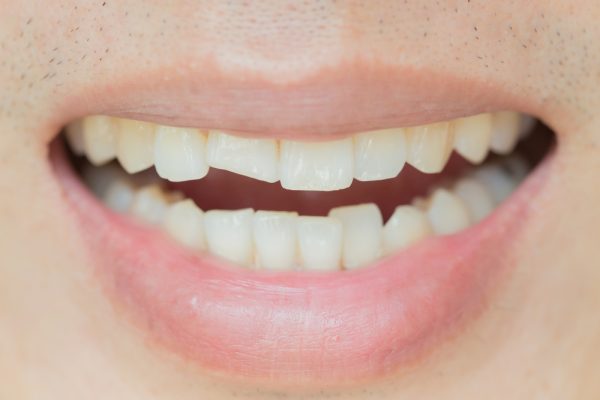
 Craze Lines: Superficial hairline cracks confined to the outer enamel. These are typically painless and cosmetic in nature, though they can be entry points for staining or, over time, deeper cracks.
- Chipped Tooth: A small piece of enamel has broken off. Often minor, but the sharp edge can irritate the tongue and cheeks, and the exposed area may be sensitive.
- Cracked Tooth: A crack that extends from the chewing surface down toward the root. Pain when biting or releasing pressure is a classic sign. This type requires prompt attention because the crack can deepen.
- Fractured Cusp: A piece of the tooth’s chewing surface breaks away, often around an existing filling. Generally less painful than other fracture types because the pulp isn’t usually involved.
- Split Tooth: A crack that has progressed far enough to divide the tooth into distinct segments. This is a more difficult situation and may result in extraction, though sometimes one portion can be saved.
- Vertical Root Fracture: A crack that begins at the root and extends upward, often asymptomatic for extended periods and detected during X-rays. These typically require extraction.
 Craze Lines
Symptoms to Watch For
Some cracked teeth are immediately obvious. Others are frustratingly subtle, such as intermittent pain that’s hard to pinpoint or sensitivity that comes and goes. Common signs that something is wrong include:
- Sharp pain when biting down or releasing pressure is a hallmark sign of a cracked tooth
- Sensitivity to hot, cold, or sweet foods and drinks that lingers after the stimulus is removed
- A visible chip, crack, or missing piece of tooth structure
- Swelling or tenderness in the gum tissue near the affected tooth
- An intermittent toothache that doesn’t follow a clear pattern
- A rough or jagged surface you can feel with your tongue
If you’re experiencing any of these, call Glenwood Dental Associates at (302) 653-5011. Even if you’re not certain whether what you have qualifies as an emergency, we’d rather you check with us and find out it’s minor than wait on something that’s silently getting worse.
What to Do Before You Reach Our Smyrna Dental Office
If you’ve broken or cracked a tooth and are on your way to see us, these steps will help protect the tooth and manage discomfort in the interim:
- Rinse with warm water: Gently rinse your mouth to clear away debris and clean the area around the damaged tooth.
- Save any fragments: If a piece of your tooth broke off, store it in milk or a saline solution. Bring it to your appointment. In some cases, fragments can be reattached or at least help us assess the extent of the damage.
- Control bleeding: If there’s bleeding, apply gentle pressure with clean gauze or a cloth for 10 to 15 minutes.
- Reduce swelling and pain: Apply a cold compress wrapped in a cloth to the outside of your cheek for 15 to 20 minutes at a time. Ibuprofen is effective for both pain and inflammation. Avoid aspirin if there is active bleeding.
- Cover sharp edges: Dental wax or sugar-free gum can temporarily protect your tongue, cheeks, and lips from jagged tooth edges until you’re seen.
- Avoid chewing on that side: Stick to soft foods and avoid the damaged area entirely to prevent the crack or break from extending further.
Emergency Treatments for Broken and Cracked Teeth
Dr. Wisk will take digital X-rays and perform a thorough examination before making any treatment recommendations. The right approach depends on the type, depth, and location of the fracture, as well as the overall health of the tooth.
Dental Bonding
Dental bonding is the least invasive option and works well for minor chips and craze lines. Dr. Wisk applies a tooth-colored composite resin directly to the damaged area, shapes it to restore the tooth’s natural contour, and hardens it with a curing light. The result is a restored appearance and reinforced surface in a single visit.
Dental Crown
Dental crowns are the treatment of choice when a significant portion of the tooth is damaged or when a crack extends deeper than the enamel but hasn’t yet reached the pulp. A custom crown caps the entire visible portion of the tooth, protecting it from further damage and restoring full function. While the permanent crown is being fabricated, a temporary crown keeps the tooth protected in the interim.
Root Canal
Root canal therapy becomes necessary when a crack or fracture has reached the inner pulp, the living tissue containing the tooth’s nerves and blood vessels. Infection or severe inflammation of the pulp produces intense, often throbbing pain. A root canal removes the compromised pulp, thoroughly cleans and disinfects the canal system, and seals the tooth. A crown is then placed to protect the treated tooth long-term. Modern root canal treatment is far more comfortable than most patients expect.
Dental Extraction
Tooth extraction is a last resort, reserved for situations where the damage is simply too extensive to allow for a functional restoration: a deeply split tooth, a vertical root fracture, or a case where infection has compromised the surrounding bone. When extraction is necessary, Dr. Wisk will walk you through replacement options, including dental implants and bridges, so you’re never left without a path forward.
Reducing Your Risk of Tooth Fractures
Some accidents can’t be anticipated. But many cracked and broken teeth are preventable with a few consistent habits:
 Wear a properly fitted mouthguard during any contact sport or high-impact physical activity
- If you grind your teeth at night, ask Dr. Wisk about a custom nightguard. Chronic grinding is one of the most common causes of gradual tooth fracture
- Avoid chewing ice, hard candies, popcorn kernels, and other hard foods that put disproportionate stress on teeth
- Never use your teeth as tools to open packaging, tear tags, or pry lids. This is a surprisingly common cause of dental fractures
- Keep up with regular checkups, where Dr. Wisk can identify weakened or heavily restored teeth before they reach the breaking point
 Wear a properly fitted mouthguard during any contact sport or high-impact physical activity
Frequently Asked Questions
In most cases, an emergency room is not the right first call for a broken tooth unless you’re experiencing severe, uncontrolled bleeding, significant facial trauma, or other injuries that need immediate medical attention. ERs can address pain and trauma, but aren’t equipped to actually treat the tooth. They don’t have the tools for bonding, crowns, or root canal procedures. A dental office is where the tooth itself can be properly evaluated and treated. Call us at (302) 653-5011 and describe your situation. We’ll let you know how urgently we need to see you and whether an ER visit should come first.
No. Unlike bones, teeth have no biological mechanism for self-repair. A crack that exists today will not close up or resolve without intervention. In fact, the forces of biting and chewing tend to cause cracks to propagate deeper over time, which is why early treatment typically results in simpler, more conservative options. A hairline crack treated promptly with bonding is a very different situation from that same crack, left for months, that has now reached the pulp and requires a root canal and crown.
If the break is minor, you may have a day or two of flexibility, but you should still call us to have it assessed quickly. If you’re in significant pain, there’s visible damage to a large portion of the tooth, or you notice swelling, don’t wait at all. The longer a damaged tooth goes without treatment, the greater the risk of infection, the deeper any existing crack may become, and the more complex the treatment required. When in doubt, call our Smyrna office and let us help you determine how urgently you need to come in.
Teeth with existing restorations can still fracture, sometimes in ways that are more complex than a fracture in a natural tooth. If a filled or crowned tooth breaks, bring any pieces you can find to your appointment, avoid chewing on that side, and cover any sharp or exposed surfaces with dental wax. The treatment will depend on how much healthy tooth structure remains and the condition of the underlying tooth. Dr. Wisk will assess everything with X-rays and a clinical exam before recommending the next steps.
Get Emergency Dental Care for a Broken Tooth in Smyrna Today
A cracked or broken tooth isn’t something to manage with pain relievers and hope. The tooth won’t improve on its own, and delaying care only narrows your treatment options. Dr. Brian Wisk and the team at Glenwood Dental Associates are ready to see you quickly, evaluate the damage thoroughly, and provide the most conservative treatment that gets the job done right.
Call (302) 653-5011 to reach our Smyrna, DE, dental office today. We welcome patients from Dover, Clayton, Kenton, and throughout central Delaware who need fast, reliable emergency dental care from a team with a long track record in the community.